

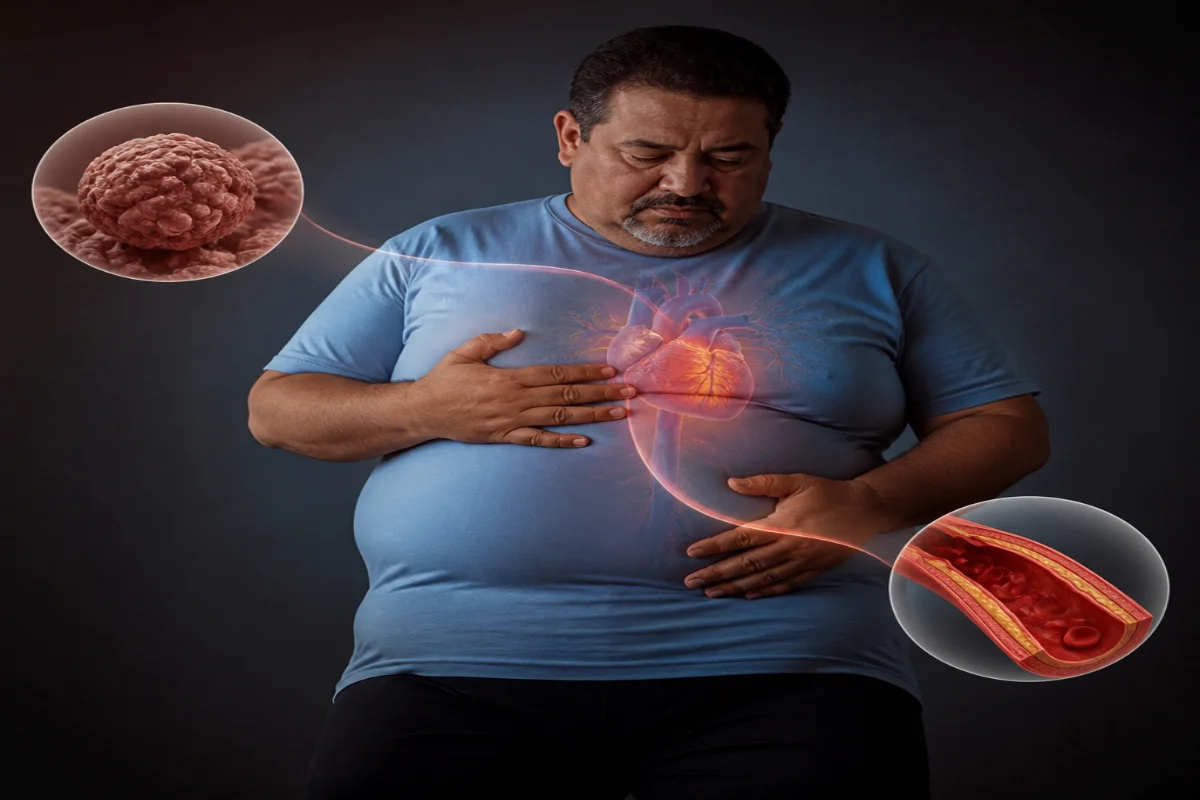
Maintaining a healthy weight influences far more than your appearance or energy levels. Research continues to reveal intricate relationships between body weight, cardiovascular disease, and hormone-dependent cancers, particularly breast cancer. For women navigating breast health decisions, understanding these connections offers a clearer picture of prevention strategies and risk factors that extend beyond family history or genetics alone.
Table of Contents
How Excess Weight Influences Breast Cancer Development
Adipose tissue functions as an active endocrine organ, producing estrogen even after menopause when ovarian production declines. This ongoing estrogen synthesis in fat cells creates a hormonal environment that can fuel the growth of estrogen-receptor-positive breast cancers, which account for roughly 70% of all breast cancer diagnoses. Postmenopausal women with elevated body mass index face a 20-40% higher risk of developing breast cancer compared to women maintaining healthy weight ranges.
Beyond estrogen production, excess adiposity triggers chronic low-grade inflammation throughout the body. Inflammatory markers such as C-reactive protein and interleukin-6 rise in proportion to fat mass, creating cellular conditions that promote DNA damage and inhibit normal apoptosis—the process by which damaged cells self-destruct. This inflammatory state also affects insulin resistance, leading to elevated insulin and insulin-like growth factor levels that stimulate cell proliferation in breast tissue.
The Cardiovascular-Cancer Intersection
Women managing breast cancer face compounded cardiovascular risks that many don’t anticipate. Certain chemotherapy agents, particularly anthracyclines and trastuzumab, carry cardiotoxic effects that can weaken heart muscle function. Radiation therapy to the left breast may expose the heart to scattered radiation, increasing long-term coronary artery disease risk. When these treatment-related factors combine with pre-existing cardiovascular risk factors such as obesity, hypertension, or elevated cholesterol, the cumulative burden on heart health becomes substantial.
The metabolic syndrome cluster—comprising abdominal obesity, insulin resistance, dyslipidemia, and hypertension—serves as a common pathway linking cardiovascular disease and breast cancer. This syndrome affects approximately one-third of adults in developed nations and creates a perfect storm of inflammatory markers, hormonal disruption, and cellular stress. Women with metabolic syndrome show elevated breast cancer incidence and poorer treatment outcomes, alongside their well-documented cardiovascular risks including Obesity and stroke risk that compounds with age and other factors. Addressing metabolic health through weight management, physical activity, and dietary modification simultaneously reduces both disease pathways.
Weight Management During and After Breast Cancer Treatment
Many women experience unexpected weight gain during breast cancer treatment, averaging 2-5 kilograms over the treatment course. Chemotherapy-induced fatigue reduces physical activity, while certain medications including steroids and hormonal therapies alter metabolism and appetite. Surgical recovery periods limit exercise capacity, and emotional stress often disrupts normal eating patterns. This treatment-related weight gain poses particular concern because it correlates with increased recurrence risk and reduced survival rates in multiple studies.
Post-treatment weight management requires careful planning that accounts for lingering side effects. Aromatase inhibitors, prescribed for five to ten years in hormone-receptor-positive cases, accelerate bone density loss and joint stiffness, making high-impact exercise challenging. Fatigue may persist for months or years after treatment completion. Successful strategies typically involve gradual increases in moderate-intensity activity such as brisk walking, swimming, or cycling for 150 minutes weekly, combined with resistance training twice weekly to preserve muscle mass and bone density.
Screening Considerations for Women with Elevated BMI
Breast density and body mass both affect mammography accuracy, though through different mechanisms. While dense breast tissue obscures tumors on mammograms by creating a “white-on-white” effect, excess body weight presents technical challenges in positioning and image quality. Women with larger breasts may require additional views, and adequate compression becomes more difficult to achieve. These factors can reduce sensitivity rates, meaning cancers may be missed or detected at later stages.
Supplemental screening methods gain importance for women facing these imaging challenges. Ultrasound provides valuable adjunctive information without radiation exposure and performs well regardless of body size. Magnetic resonance imaging offers the highest sensitivity for cancer detection but requires intravenous contrast and remains expensive. Emerging research in breast imaging technology continues to refine techniques that improve detection across diverse patient populations. The screening strategy should balance cancer detection capability with practical considerations including cost, accessibility, and false-positive rates that lead to unnecessary biopsies.
Surgical Outcomes and Weight-Related Factors
Obesity influences surgical complications following breast procedures, though modern techniques and enhanced recovery protocols have significantly improved outcomes. Wound healing complications including infection, seroma formation, and skin necrosis occur more frequently in patients with BMI above 30. Reconstructive surgery presents additional technical challenges, with higher rates of flap failure, fat necrosis, and implant-related complications. Surgical time increases with body size, extending anesthesia exposure and associated risks.
Despite these challenges, surgical intervention should never be denied based solely on weight. Many women undergo successful breast cancer surgery and reconstruction at elevated BMI levels, particularly when surgeons employ meticulous technique and patients engage in preoperative optimization. Smoking cessation, glucose control in diabetic patients, and nutritional support improve healing capacity. Understanding potential complications allows patients to make informed decisions and recognize warning signs that require prompt attention. Anyone concerned about surgical outcomes should be aware of warning signs that suggest substandard care versus expected post-surgical changes.
Practical Steps for Risk Reduction
Weight reduction of just 5-10% of body weight produces measurable improvements in inflammatory markers, insulin sensitivity, and hormone levels. This modest loss often proves more sustainable than aggressive dieting and yields meaningful health benefits. The Mediterranean dietary pattern—emphasizing vegetables, fruits, whole grains, legumes, fish, and olive oil while limiting red meat and processed foods—demonstrates consistent associations with reduced breast cancer incidence and improved cardiovascular health in observational studies.
Physical activity provides benefits independent of weight loss through multiple mechanisms. Exercise reduces circulating estrogen and insulin levels, decreases inflammation, enhances immune function, and improves insulin sensitivity. Both aerobic exercise and strength training contribute to breast cancer risk reduction, with the greatest benefit seen in women accumulating at least 150 minutes of moderate-intensity activity weekly. For women who have completed breast cancer treatment, maintaining regular physical activity reduces recurrence risk by approximately 25-30% across multiple studies.
Moving Forward with Integrated Health Strategies
Viewing breast health through a whole-body lens allows women to make lifestyle modifications that simultaneously address multiple disease risks. Rather than treating cardiovascular health and cancer prevention as separate concerns, recognizing their shared metabolic underpinnings creates opportunities for efficient, multipurpose interventions. Weight management, regular physical activity, and dietary quality affect both cardiovascular and cancer outcomes, making them foundational elements of long-term health strategy.
This integrated approach proves particularly valuable for women with family histories of breast cancer or cardiovascular disease, who may feel overwhelmed by competing health priorities. Small, consistent changes accumulate into substantial risk reduction over years and decades. Regular screening appropriate for individual risk factors, combined with modifiable lifestyle factors within personal control, forms a comprehensive strategy for protecting both breast and cardiovascular health throughout the lifespan.