

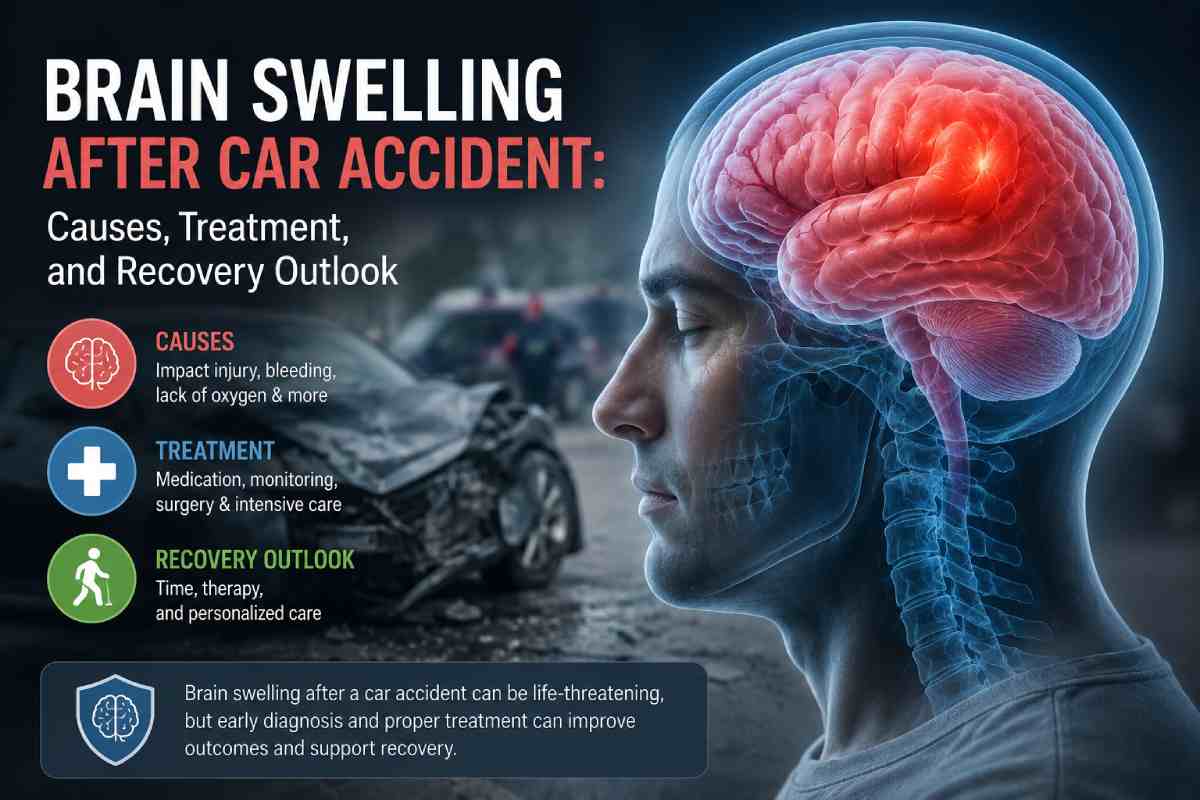
Car accidents can cause more than visible injuries. One of the most serious and potentially life-threatening complications is brain swelling after a car accident, medically known as cerebral edema. This condition requires immediate attention because pressure inside the skull can quickly affect brain function.
Understanding how brain swelling develops, what symptoms to watch for, and how it is treated can help patients and families respond quickly and make informed decisions.
Table of Contents
What Is Brain Swelling After a Car Accident?
Brain swelling occurs when fluid builds up in or around brain tissue following trauma. In a car accident, this is usually the result of a traumatic brain injury (TBI), which can range from mild concussions to severe head trauma.
Because the skull is a closed space, even a small increase in swelling can raise intracranial pressure. This pressure can reduce blood flow and oxygen to the brain, increasing the risk of damage.
Why Brain Swelling Happens After a Crash
Direct Impact to the Head
A blow to the head during a collision can cause bruising, bleeding, and inflammation in brain tissue. This is one of the most common causes of swelling.
Rapid Movement (Acceleration and Deceleration)
Even without direct impact, the brain can shift inside the skull during sudden stops or collisions. This movement can damage blood vessels and trigger swelling.
Internal Bleeding
Bleeding within the brain or between the brain and skull can increase pressure and lead to swelling.
According to the Centers for Disease Control and Prevention, traumatic brain injuries are a leading cause of disability and death in the United States, with car accidents being a major contributor.
Symptoms to Watch For
Symptoms of brain swelling after a car accident may appear immediately or develop over time. Common signs include:
- Severe or worsening headache
- Nausea and vomiting
- Confusion or disorientation
- Dizziness or balance problems
- Difficulty speaking or understanding speech
- Unequal pupil size
- Seizures
- Loss of consciousness
These symptoms should never be ignored. Immediate medical evaluation is critical.
How Brain Swelling Is Diagnosed
Physical and Neurological Exam
Doctors assess alertness, coordination, reflexes, and other neurological functions.
Imaging Tests
CT scans and MRIs are used to detect swelling, bleeding, or structural damage in the brain.
Intracranial Pressure Monitoring
In severe cases, doctors may monitor pressure levels inside the skull to guide treatment decisions.
Treatment Options
Treatment depends on the severity of the swelling and the underlying cause.
Medications
Doctors may use:
- Diuretics to reduce fluid buildup
- Sedatives to lower brain activity and oxygen demand
- Anti-seizure medications
Oxygen and Ventilation Support
Maintaining proper oxygen levels is essential for brain recovery.
Surgical Intervention
In severe cases, surgery may be required to relieve pressure. This can include:
- Removing part of the skull (decompressive craniectomy)
- Draining blood or fluid
- Repairing damaged blood vessels
Managing Underlying Causes
If swelling is caused by bleeding, infection, or another condition, treating that issue is a key part of recovery.
Recovery Timeline and Outlook
The recovery process for brain swelling after a car accident varies widely.
- Mild cases may improve within days
- Moderate cases may take weeks
- Severe cases can require months of recovery and rehabilitation
Factors that influence recovery include:
- Severity of the injury
- Speed of medical treatment
- Age and overall health of the patient
Some individuals recover fully, while others may experience long-term effects.
Potential Long-Term Effects
Even after swelling decreases, some patients may face ongoing challenges, such as:
- Memory and concentration issues
- Difficulty with movement or coordination
- Speech or communication problems
- Emotional or behavioral changes
Rehabilitation programs can help address these issues and improve quality of life.
Expert Insight: Early Treatment Is Critical
Medical professionals consistently emphasize that early intervention is one of the most important factors in outcomes. The sooner brain swelling is identified and treated, the lower the risk of permanent damage.
Delays in treatment can allow pressure to increase, which may lead to more severe complications.
Real-World Impact
Traumatic brain injuries are a significant public health concern. The World Health Organization estimates that road traffic accidents are among the leading causes of injury worldwide.
This highlights the importance of both prevention and prompt medical care when accidents occur.
Preventing Brain Injury in Car Accidents
While not all injuries can be avoided, certain measures reduce risk:
- Wearing seat belts
- Using proper headrests
- Installing airbags
- Avoiding distracted or impaired driving
These steps can help minimize the severity of injuries in the event of a crash.
Practical Takeaways
If you or someone else may have brain swelling after a car accident:
- Seek immediate medical attention
- Monitor for worsening symptoms
- Follow all medical instructions carefully
- Attend follow-up appointments and rehabilitation
Taking these steps can improve recovery outcomes.
Conclusion
Brain swelling after a car accident is a serious condition that requires prompt medical care. While many cases improve with treatment, the outcome depends on the severity of the injury and how quickly it is addressed.
By understanding the causes, symptoms, and treatment options, patients and families can respond effectively and support the recovery process.