

The best vision correction surgery is the one your eyes are suited to after proper testing, regardless of how new or widely discussed it is.
Table of Contents
Clarify what you want fixed
Start with what bothers you most about glasses or contacts. Some people want clear distance vision for driving, while others over 45 find small print a daily strain and want help with close-up tasks.
Your age and prescription stability matter. The Royal College of Ophthalmologists’ patient guide to laser vision correction says you should be over 18 with a stable prescription, normally meaning no change greater than 0.5 dioptres in the last two years. If your prescription is still shifting, discuss whether waiting would be wiser.
If you are in your late 40s or older, expect a frank discussion about near vision. Laser treatment on the cornea can sharpen distance vision, but it doesn’t stop the loss of close focus with age. You may still need reading glasses even when road signs look clear. Monovision is one approach where one eye is set for distance and the other left short-sighted for near tasks. Ask if a contact lens trial could show how you’d cope.
Why testing comes before choice
You can’t judge suitability from your prescription alone. Two people with the same glasses strength can get different advice once their eyes have been measured.
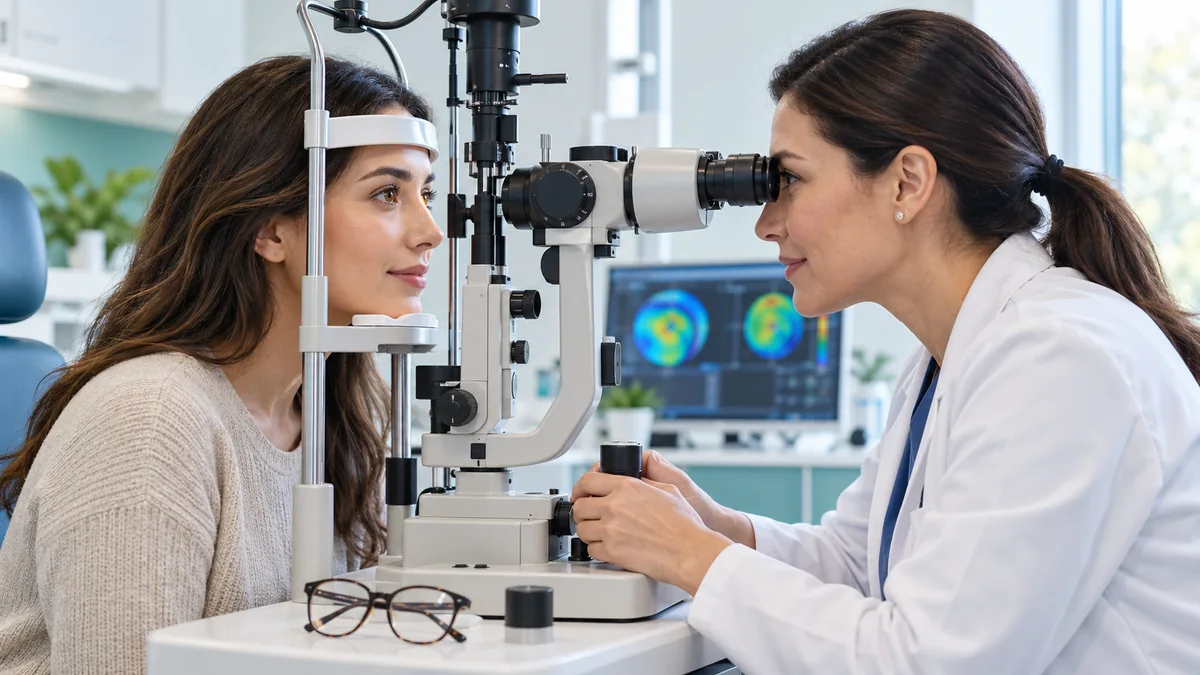
Refraction measures your prescription. Corneal thickness and shape show how much tissue might be reshaped with a safe margin. Tear film checks and an assessment of the eye’s surface show if dryness may slow healing. These findings help narrow the field more reliably than adverts or friends’ experiences.
Tell the surgeon if night driving is important to you or you already notice glare around lights. Ask what the measurements reveal about your eyes and whether customised treatment would offer a benefit. Bring a list of health conditions and medicines so the team can assess any implications for treatment and healing.
No one can establish their own suitability for treatment at home. The examination helps distinguish between laser and lens options.
How laser procedures differ
All laser vision correction surgery reshapes the cornea so light focuses more clearly. The right method for you depends on tissue measurements, eye shape, dryness and how much recovery time you can allow.
Once those checks are done, your surgeon can talk through surgical options for clearer vision in plain terms. That discussion should connect each method to your own results, not to a general ranking.
LASIK with a flap
LASIK lifts a thin hinged flap, reshapes tissue beneath and lays it back. The early days of recovery often feel more comfortable than surface healing. Ask how the flap fits with contact sports or dusty work, and whether your measurements leave a safe margin.
Surface ablation such as PRK or LASEK
Surface treatments reshape the cornea without creating a flap. The thin outer layer is removed or moved aside, depending on the technique, and the surface then heals over. Recovery is usually slower than after LASIK, with discomfort and vision clearing in stages. Ask how much healing time to plan for and how any history of dryness affects aftercare.
Lenticule extraction such as SMILE
Lenticule extraction uses a laser to create a small disc of tissue within the cornea, which the surgeon removes through a narrow opening. There is no lifted flap. Ask whether this approach can treat your prescription and how its recovery compares with the other options suitable for you.
No method gives perfect vision to everyone.
When a lens procedure or glasses are still right
Laser is not the only route. When the prescription is very high or corneal tissue is limited, removing more tissue may not leave a safe margin, and your surgeon will explain plainly if that applies to you.
A lens procedure may then be considered. A phakic lens, such as an implantable collamer lens, sits inside the eye alongside your natural lens. Refractive lens exchange instead replaces the natural lens with an artificial one. These are operations inside the eye, with different risks from corneal laser treatment. Ask why either is appropriate for you, what follow-up is needed and how your age affects the choice.
Staying with glasses or contacts is also a sound choice. No vision correction surgery can promise freedom from glasses for life. Near focus changes with age, and a small amount of remaining blur can mean needing glasses for night driving or long hours at a screen.
Healing and what to ask your surgeon
Ask for a recovery plan specific to the recommended procedure. Early improvement is not the same as fully settled vision. Arrange transport home, allow time away from work and follow the prescribed drop schedule and activity restrictions.
Dryness, a gritty feeling and halos or starbursts around lights can occur after treatment. Ask how your examination findings affect these risks and what happens if symptoms persist. The consent discussion should also cover less common but serious complications, including infection and loss of vision, and the possibility of needing further treatment. Get clear instructions on whom to contact if symptoms worsen.
Go in with notes. Clear questions keep the discussion focused on your eyes rather than brand names.
- Is treatment wise now given prescription stability and dryness, or is waiting safer?
- Do test results point towards a laser procedure or a lens procedure?
- Which tasks may still need glasses, and when would further treatment be considered?
- What drops and visits are needed if healing is slow?
The aim is to match treatment to your eyes and daily habits. A careful examination and frank discussion will narrow the field far better than adverts will.