

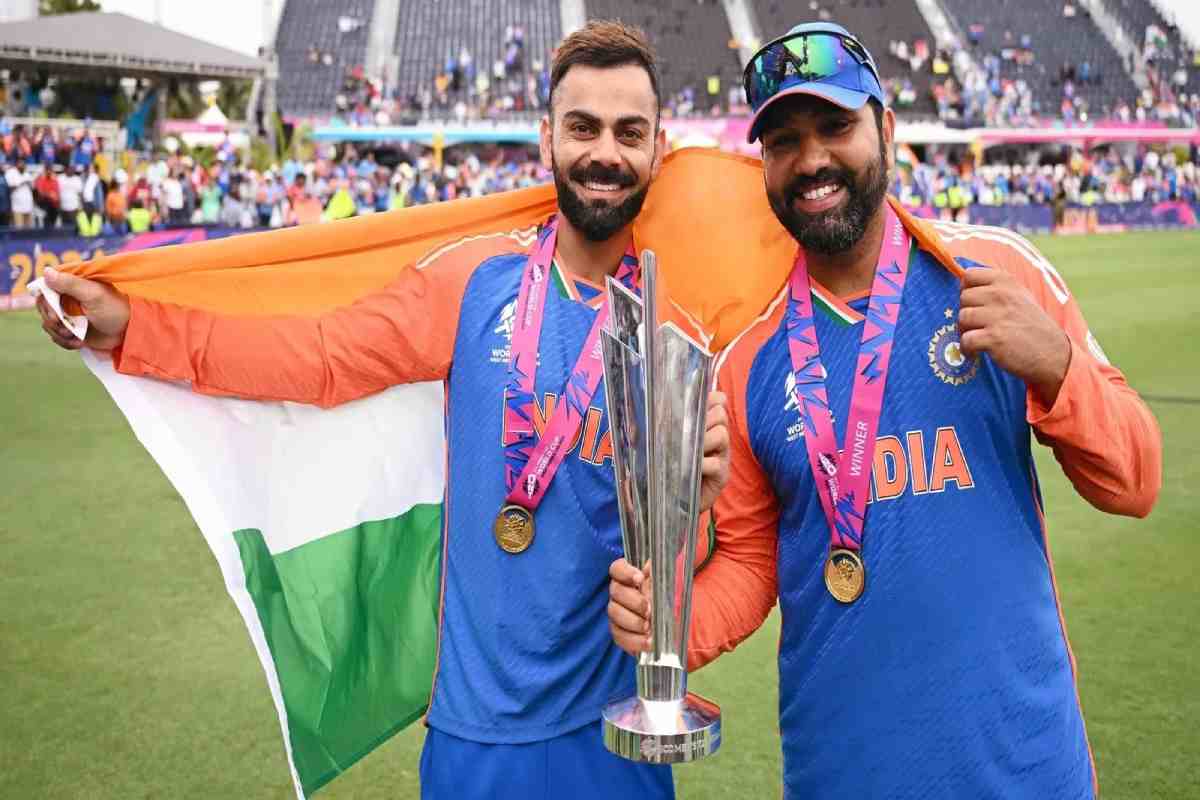
Indian cricket is entering a high-stakes transition at the exact moment its global reputation has never looked stronger. The Future of Indian Cricket After Recent Global Success will be shaped by how quickly the team replaces two pillars—Virat Kohli and Rohit Sharma in ODIs and Tests—while keeping the winning habits they embedded: elite fitness, overseas ambition, and calm decision-making under pressure.
Table of Contents
The Future of Indian Cricket After Recent Global Success – Quick Answer
India can stay globally competitive if it turns domestic depth into consistent international roles: Yashasvi Jaiswal and Shubman Gill are best placed to carry top-order responsibility, Sai Sudharsan and others can strengthen the middle order, and leadership must settle around clear, format-specific captains. The Ranji Trophy, Duleep Trophy, and India A tours give India a strong pathway; execution in overseas conditions will decide how fast the transition succeeds.
Why This Transition Is Different From a Typical Rebuild
Retirements are normal in sport, but this one changes multiple layers at once: top-order output, dressing-room authority, and the everyday standard for preparation. Over more than a decade, Kohli and Rohit were not only run-scorers; they were the reference point for what “international-ready” looks like in India.
Kohli’s numbers show the scale of the gap. He finished with 9,230 Test runs at an average of 46.85, including seven double centuries, and 13,906 ODI runs with 50 centuries—an ODI profile built for chases and pressure. Rohit’s white-ball record is equally defining: 10,709 ODI runs at 49.12, the 264 against Sri Lanka in 2014 that still stands as the highest individual ODI score, and three ODI double hundreds that no one else has matched.
For beginners, these figures are useful because they highlight what India is trying to replace: not one great season, but repeatable excellence across years and conditions.
The Legacy That Will Quietly Decide the Next Decade: Standards
Kohli’s captaincy turned India into a Test force abroad, with 40 wins in 68 matches and landmark series wins in Australia in 2018–19 and 2020–21. That shift changed expectations for every touring squad: competing in England was no longer the goal; winning became the target.
Just as important was the fitness culture. Strength, agility, and diet became non-negotiable, and younger batters such as Shubman Gill and Yashasvi Jaiswal developed inside that environment rather than discovering it late.
Rohit’s leadership offered a different template—calm, tactical, and player-friendly—highlighted by the 2024 T20 World Cup final where India beat South Africa by seven runs. His mentoring at Mumbai Indians, including with Tilak Varma, also matters because transitions are easier when knowledge is passed down rather than reset.
Batting Succession: Roles First, Names Second
Replacing icons is easier when roles are clear. India does not need “the next Kohli” or “the next Rohit” as clones; it needs an opener who can set games up, a middle-order anchor who can absorb pressure, and finishers who can convert platforms into match-winning totals.
Fans often track players through apps and score feeds—sometimes right after a sky247 login—but the real question is whether a batter’s method survives different conditions, not just whether the highlights look good.
Yashasvi Jaiswal: A Head Start in Test Cricket
At 22, Jaiswal already looks like India’s brightest prospect. His 1,798 Test runs at 52.88 include four centuries and two double tons—output that signals both talent and stamina. The 712 runs he scored in the 2024 England series showed he can dominate high-quality attacks, and a century on Test debut in Australia in 2023 proved he can handle hostile environments.
The next step is adaptability. Swing-friendly conditions—like England can offer in 2025—will test whether his aggressive approach stays disciplined when the ball moves late. For new followers, this is a core Test skill: knowing when to attack and when to leave.
Shubman Gill: Talent, Pressure, and the Captaincy Conversation
Gill, 25, is often discussed as a long-term leader, but his batting must become more “weatherproof.” He has 1,893 Test runs at 35, and his struggles in England—88 runs at 14.66—show how seam movement can pull him into uncertain footwork and edges.
That does not erase his upside. He has 4,000+ first-class runs and has led in the IPL with Gujarat Titans, which is relevant because leadership is learned through repeated decision-making. The challenge is to pair that leadership with the mental toughness Kohli showed when conditions were toughest and scrutiny was loudest.
Sai Sudharsan and Ruturaj Gaikwad: Two Paths to Stability
Sai Sudharsan, 23, brings a calmer, technique-first profile that draws comparisons to Rahul Dravid. His 165 runs for Surrey in 2024 included a century, and his 527-run IPL 2025 campaign shows he can score in different tempos. Add 900+ runs in the 2024–25 Ranji Trophy, and you get a batter who looks built for long innings, even though his international debut is still pending.
Gaikwad offers a different shape: a stylish top-order option with leadership experience in the 2024 Duleep Trophy. He scored 1,000+ first-class runs in 2024–25 and added 496 IPL runs in 2024 for Chennai Super Kings, underlining his white-ball value. A recent injury has slowed his Test case, so timing and fitness will influence how quickly he becomes a regular option.
Depth Options: What They Are Realistically For
India’s bench strength is real, but not every high domestic scorer becomes an international mainstay. The step up is less about talent and more about handling pace, bounce, and relentless accuracy for long spells.
- Abhimanyu Easwaran: 7,674 first-class runs and 27 centuries make him a domestic heavyweight, but struggles in practice matches against Australia A in 2024 show how quickly international-quality bowling exposes small technical gaps.
- Abhishek Sharma: a dynamic white-ball option with 478 IPL runs in 2024 and a T20I debut hundred—100 off 47 balls vs Zimbabwe in 2024—plus left-arm spin; limited red-ball exposure keeps his Test path uncertain for now.
- Tilak Varma: 452 IPL runs in 2024 and a first-class average of 40 suggest a middle-order ODI option with potential to grow into Tests, especially with confidence gained from Rohit’s mentoring at Mumbai Indians.
- Priyansh Arya: 600+ runs in the 2024–25 Ranji Trophy at age 21 mark him as a longer-term project rather than an immediate replacement.
The simplest way to read this list is by timeline: Jaiswal and Gill are “now,” Sudharsan and Gaikwad are “next,” and Arya is “later,” with Easwaran as experienced cover.
Domestic Cricket and India A Tours: The Engine Room
India’s advantage is structural. The Ranji Trophy and Duleep Trophy create volume—many matches, many conditions—while India A tours create relevance by simulating overseas challenges before a player is thrown into a full international series.
The BCCI’s investment in A tours, including the 2024 Australia series, matters because it reduces the shock of foreign conditions. A batter who has already faced extra bounce and unfamiliar movement is less likely to panic when the real series begins. That preparation becomes crucial with a major test like the 2025 England series, which will be a pressure point for players such as Jaiswal, Gill, and Sudharsan.
Domestic performance still needs context. Karun Nair’s 863 runs in the 2024–25 Ranji Trophy underline how competitive the circuit remains, but selection is about fit: who solves a specific international problem, not who tops a chart.
Captaincy After the Icons: Picking a Style That Fits the Format
Leadership is the second big vacancy. Kohli’s era was defined by aggression and fitness-driven intensity; Rohit’s by calm control and tactical clarity. The next captain must decide what to keep and what to evolve, because copying either style without the personality behind it rarely works.
Suryakumar Yadav has already shown a clear approach in T20Is. Since taking over as T20I captain in 2024, he has operated with a 70% win rate, matching his own batting identity: proactive, creative, and unafraid of risk. He also has 2,141 T20I runs at a 140+ strike rate, which helps because credibility in the format buys time for bold decisions.
Red-ball leadership is a different job. Suryakumar’s single Test match in 2023 and limited red-ball leadership experience rule him out as a Test solution, so India’s long-format captaincy will likely need to come from players who live in that rhythm daily.
What “Success” Should Look Like Next
India does not need to win everything immediately to be on track; it needs to build a stable core that travels well. That means at least one opener who can blunt new-ball spells, one middle-order batter who can bat time, and a culture that keeps fielding and fitness standards high.
- Lock roles early: decide who opens, who anchors at No. 3/4, and who finishes in ODIs, then give them extended runs.
- Use India A tours as selection filters, not just warm-ups, especially before England and Australia assignments.
- Choose captains by format and give them time, so tactics and team culture can settle.
- Keep the fitness baseline uncompromising, because it directly affects fielding and late-innings bowling control.
The post-Kohli and Sharma era will not be defined by nostalgia. It will be defined by whether India turns its depth into dependable performances when the ball swings, the crowd is hostile, and the match is moving away.
FAQ
Q: What should fans watch first in India’s next phase?
A: Look for clarity in roles—especially who opens in Tests and who anchors the ODI middle overs—because stable roles usually lead to stable results.
Q: Why are Kohli and Rohit so hard to replace even with strong young talent?
A: Their value combined elite output with leadership habits over many years, including Kohli’s 40 wins in 68 Tests as captain and Rohit’s consistent ODI production.
Q: Which young batter looks most ready for long Test innings?
A: Yashasvi Jaiswal has the strongest early profile, with 1,798 Test runs at 52.88 including four centuries and two double tons.
Q: How do India A tours help a player succeed overseas?
A: They reduce the “first-tour shock” by exposing players to foreign conditions before they face full-strength international attacks.
Q: Will India need one new superstar to stay on top?
A: Not necessarily; India can remain strong if several players share responsibility and the team keeps the fitness and preparation standards set in the previous era.