

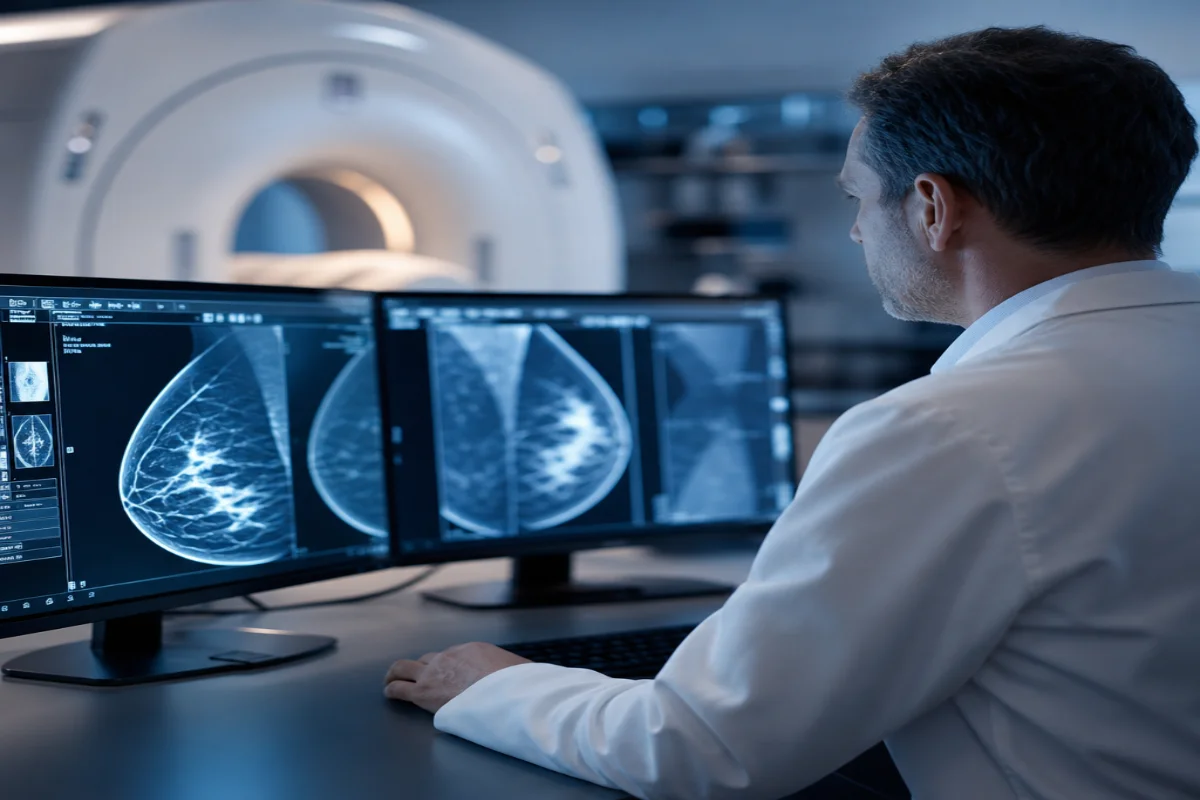
Breast cancer remains one of the most diagnosed cancers among women worldwide, but advances in medical imaging have fundamentally changed how physicians detect, diagnose, and treat the disease. From 3D mammography that captures detailed breast tissue layers to MRI-guided biopsies that pinpoint suspicious cells with millimeter precision, imaging technology now plays a central role at every stage of breast cancer care. Understanding these tools and how they work together can help women make informed decisions about screening schedules, diagnostic procedures, and treatment pathways.
Table of Contents
The Evolution of Breast Cancer Screening Methods
Traditional 2D mammography has been the screening standard for decades, but it has limitations, particularly in women with dense breast tissue where overlapping layers can obscure small tumors. Digital breast tomosynthesis, commonly called 3D mammography, addresses this problem by taking multiple X-ray images from different angles and reconstructing them into a three-dimensional view. Studies show this technology detects 20 to 65 percent more invasive breast cancers compared to conventional mammography while also reducing false positives that lead to unnecessary biopsies.
Breast MRI uses powerful magnets and radio waves to create detailed images without radiation exposure. While not recommended as a routine screening tool for average-risk women due to cost and the potential for false positives, MRI excels at screening women with inherited genetic mutations like BRCA1 or BRCA2, those with a personal history of breast cancer, or women who received chest radiation before age 30. The technology can detect cancers that mammography misses, particularly in dense tissue, though it requires contrast dye injection and takes longer than a standard mammogram.
Image-Guided Biopsies: Precision in Diagnosis
When imaging reveals a suspicious area, the next step is usually a biopsy to determine whether cancer cells are present. Image-guided biopsy techniques have largely replaced surgical biopsies for initial diagnosis because they are less invasive, require no general anesthesia, leave minimal scarring, and provide results within days rather than weeks. Ultrasound-guided core needle biopsy works well for masses that are visible on ultrasound, using real-time imaging to guide a hollow needle that removes small tissue cylinders for laboratory analysis.
Stereotactic breast biopsy uses mammography or 3D tomosynthesis to target calcifications or masses that appear only on X-ray images. The patient lies face down on a specialized table with the breast positioned through an opening, while computer coordinates guide the needle to the exact location. MRI-guided biopsy serves as the option when an abnormality shows up only on MRI scans, though it requires specialized equipment and takes longer than other biopsy methods. Each technique has specific advantages depending on what imaging modality first identified the suspicious finding and where it sits within the breast.
The Role of Advanced Imaging in Treatment Planning
Once breast cancer is confirmed, imaging determines the cancer’s extent, a process called staging that directly influences treatment decisions. CT scans of the chest and abdomen check whether cancer has spread to the lungs, liver, or lymph nodes. Bone scans or PET-CT scans may be ordered if there is concern about metastasis to the skeleton or distant organs. For women considering breast-conserving surgery rather than mastectomy, breast MRI helps surgeons assess the tumor’s size and location, identify additional cancer sites in the same breast, and check the opposite breast for unsuspected disease.
Imaging also guides certain therapeutic procedures. Radiation therapy relies on CT simulation scans to map the precise area requiring radiation while protecting surrounding healthy tissue. In some specialized centers, a neuro interventional radiologist may perform procedures that use real-time imaging to treat complications from cancer or its treatment, such as placing stents in blocked blood vessels or performing embolization to control bleeding. These minimally invasive techniques reduce recovery time compared to traditional surgery and can be particularly valuable for patients whose overall health makes major operations risky.
Monitoring Treatment Response and Detecting Recurrence
For women receiving chemotherapy before surgery, a strategy called neoadjuvant therapy, imaging tracks how well the tumor responds to treatment. Ultrasound or MRI performed during the chemotherapy course shows whether the mass is shrinking as expected, which helps oncologists decide whether to continue the current regimen or switch to a different drug combination. Complete disappearance of the tumor on imaging, particularly MRI, correlates with better long-term outcomes, though pathology examination of the surgical specimen remains the definitive test of treatment response.
After treatment concludes, surveillance imaging watches for cancer recurrence. Guidelines vary based on cancer stage and treatment received, but most women undergo annual mammography of any remaining breast tissue. Those who had breast-conserving surgery typically need mammograms of the treated breast every six months for the first few years, then annually once patterns stabilize. Additional imaging with ultrasound, MRI, or other modalities comes into play only if physical examination or symptoms suggest a problem, as routine scans in asymptomatic patients have not proven to improve survival rates.
Understanding Dense Breast Tissue and Supplemental Screening
Breast density refers to the proportion of fibrous and glandular tissue relative to fatty tissue, and it matters because dense tissue appears white on mammograms, as do tumors, making cancers harder to spot. Roughly 40 percent of women have heterogeneously dense or extremely dense breasts, and many regions now require radiologists to notify women of their breast density status. Women with dense breasts face both a higher baseline risk of developing breast cancer and a greater chance that mammography will miss an existing cancer.
Supplemental screening options for women with dense breasts include automated breast ultrasound, which adds sound wave imaging to the annual mammogram, and contrast-enhanced mammography, which injects iodine dye to highlight blood flow patterns associated with tumors. Breast MRI remains the most sensitive supplemental tool but is typically reserved for women who have additional risk factors beyond density alone. Each method involves trade-offs between detection rates, false positive rates, cost, and availability, making shared decision-making between patient and physician essential.
Integrating Imaging Into Holistic Health Approaches
While advanced imaging represents a powerful diagnostic and treatment tool, it functions best as part of a comprehensive approach to health that includes lifestyle factors, preventive care, and attention to overall wellbeing. Women focused on reducing cancer risk often explore strategies that support immune function and reduce inflammation, and emerging research continues to examine connections between gut health and cancer risk. Some studies have investigated whether probiotic supplementation might influence breast cancer risk through effects on estrogen metabolism and immune system modulation, though findings remain preliminary and cannot replace established screening practices.
The psychological dimension of imaging also deserves attention. Waiting for screening results creates anxiety for many women, and false positives that require additional testing generate stress even when ultimately benign. Conversely, a clean screening result provides reassurance but should not replace clinical breast exams or prompt investigation of new symptoms between scheduled mammograms. Understanding what different imaging technologies can and cannot accomplish helps set realistic expectations and reduces the tendency to view any single test as either infallible or worthless.
Making Informed Decisions About Breast Imaging
The array of available imaging options can feel overwhelming, but decision-making becomes clearer when based on individual risk profiles rather than generalized recommendations. Women should discuss their personal history, family history, genetic testing results if applicable, and breast density status with their healthcare providers to determine an appropriate screening schedule. Those at average risk typically begin annual or biennial mammography between ages 40 and 50 depending on regional guidelines, while high-risk women may start earlier and add supplemental MRI screening.
Cost and access remain practical considerations, as insurance coverage for supplemental screening varies and advanced imaging facilities may not be available in all geographic areas. Women seeking breast cancer care should look for centers that offer multidisciplinary teams where radiologists, surgeons, medical oncologists, and radiation oncologists collaborate on treatment plans. This integrated approach ensures that imaging findings translate directly into coordinated care rather than requiring patients to navigate between disconnected specialists who may not communicate effectively about their case.
As imaging technology continues advancing with innovations like artificial intelligence-assisted mammography interpretation and molecular breast imaging that detects metabolic activity in tumors, the fundamentals remain constant: early detection through appropriate screening saves lives, accurate diagnosis requires the right imaging tool for each clinical scenario, and treatment planning benefits from comprehensive visualization of disease extent. Women who understand these imaging options can advocate effectively for their own care and work with their medical teams to create screening and treatment strategies tailored to their specific needs and circumstances.